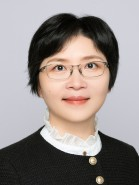
Keynote Speaker I
Prof. Yan Li, Zhejiang University, China
Yan Li got her Ph. D from Department of Agricultural Education at Texas A&M University in August, 2004. Since September 2004, Dr. Li has been working in College of Education, Zhejiang University. She is the Director of Research Center for AI in Education and Director of Department of Curriculum and Learning Sciences, Zhejiang University. Her research interests include web-based distance education, science and technology education in K-12 schools, AI in education, diffusion of educational innovations, and etc. During April-July, 2009, she visited University of Florence, doing research work in area of media education and digital literacy improvement for the youth generation. During June 2014 and June 2015, supported by Chinese Scholarship Council (CSC), Dr. Li visited Indiana University-Bloomington as a visiting scholar, doing Open Educational Resources and MOOCs-related research work with Dr. Curtis Bonk. In recent decades, she has presided more than 15 international-, national- and provincial-level research projects and has published series of academic papers or books in area of educational technology. You may find her papers in international journals such as Computers & Education, British Journal of Educational Technology, International Journal of Educational Technology in Higher Education, Educational Technology Research & Development, Thinking Skills & Creativity, International Journal of STEM Education, International Journal of Human-Computer Studies, Education and Information Technologies, International Journal of Human-Computer Interaction, Journal of Educaitonal Computing Resarch, Asia Pacific Journal of Education, Social Behavior and Personality, International Journal on Emerging Technologies in Learning, and etc. Also, Dr. Li published more than 100 papers in Chinese journals.
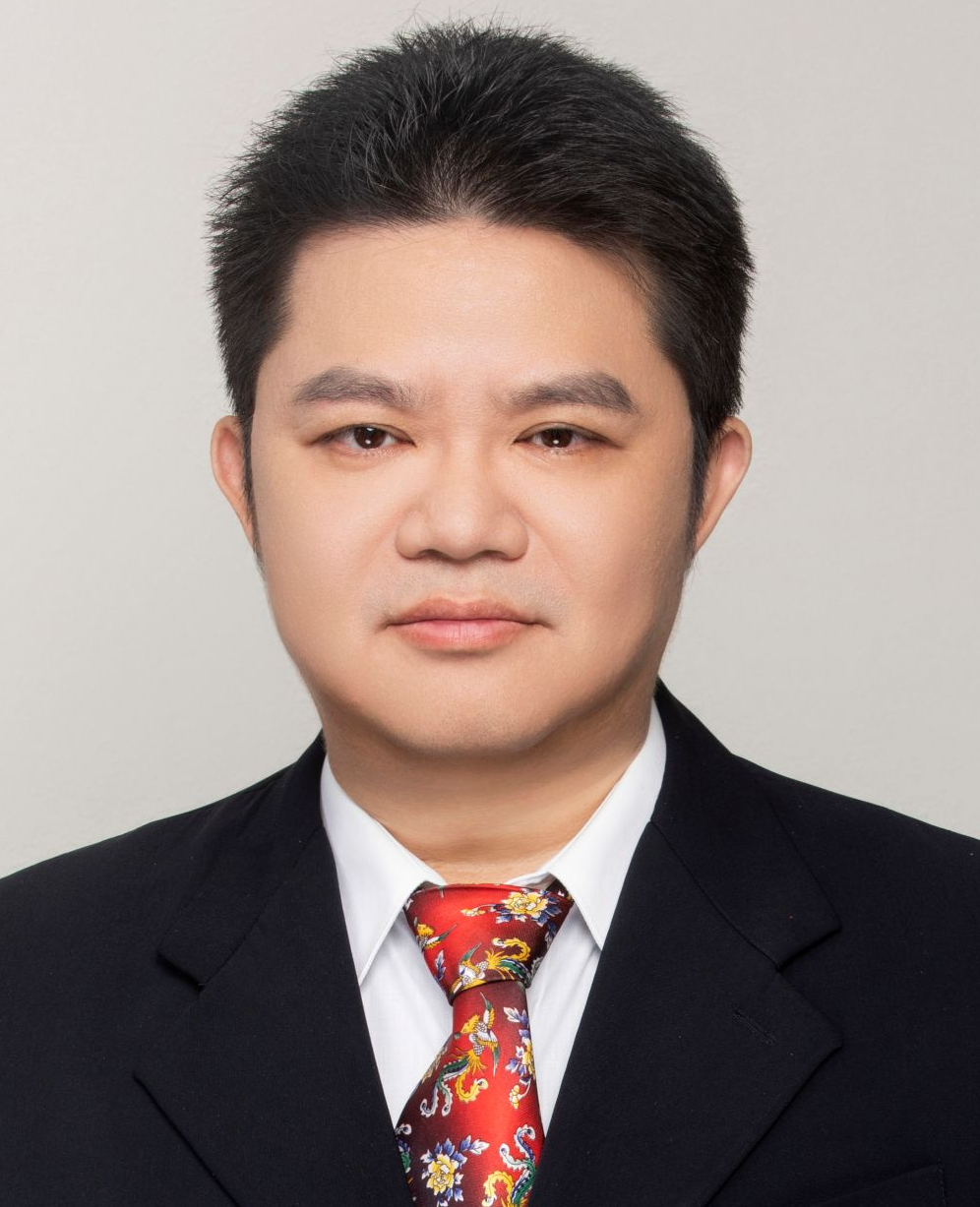
Keynote Speaker II
Prof. Heng Luo, Central China Normal University, China
Longkai Wu is a professor Central China Normal University, Wuhan, China. He holds a Doctor of Philosophy degree from Nanyang Technological University (NTU), Singapore. His research interests include Artificial Intelligence in Education, Virtual and Augmented Reality, Formal and Informal Learning, STEM, Learning by Inquiry, Information Technology and Policy in Education. Professor Wu has led and co-led several Singapore National Research Foundation and Ministry of Education funded research projects totaling over S$3 million. He has led the publication of three Springer books and published over 100 international journal articles, international book chapters and top conference papers. At CCNU, Professor Wu serves as Deputy Director for Research Management of Social Sciences and Humanities at the Center, while also assisting the Faculty of Artificial Intelligence in Education in developing and supporting its undergraduate programs in Data Science and Big Data Technology and Artificial Intelligence.
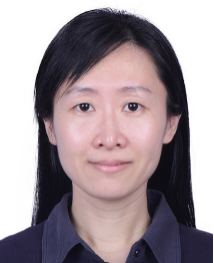
Keynote Speaker III
Prof. Zehui Zhan, South China Normal University, China
Zehui Zhan, Ph.D, professor, doctoral supervisor, young Pearl River Scholar, Hong Kong Scholar, Deputy director of the STEAM Education Alliance of Colleges and High Schools in the Guangdong-Hong Kong-Macao Greater Bay Area, Deputy director of the Guangdong Provincial Key Laboratory of Artificial Intelligence and Smart Education, deputy director of the Guangdong Provincial Engineering Technology Research Center for Education Assessment Data, President of the cross-disciplinary committee of the Guangdong Provincial College Entrance Examination Research Association, Director of the Wisdom Education Equipment Industry-University-Research Base of South China Normal University, Deputy director of the Center for Innovative Talent Cultivation at South China Normal University, vice editor-in-chief of the international journal Asia Pacific Journal of Innovation and Entrepreneurship, editorial board member of Computers & Education-AI, editorial board member of Future Education Research, secretary-general of the Creative and Cross-disciplinary Education Research Group of the Information Technology Education Professional Committee of the China Educational Technology Association, standing director of the Digital Science and Technology Branch of the Guangdong Higher Education Association. Her main research directions are: interdisciplinary and innovative education, learning science and intelligent education. In recent years, she has completed research projects funded by the National Natural Science Foundation of China, the National Social Science Foundation of China, the Humanities and Social Sciences Research Fund of the Ministry of Education, the Guangdong Natural Science Foundation, and the Guangdong Education Department Basic Research and Application Research Major Project, publishing six academic monographs, co-editing more than ten textbooks, and publishing over 100 academic papers in domestic and foreign academic journals. She has won the nomination for the National Excellent Doctoral Dissertation, the Excellent Young Teacher Award of the Education Foundation of the Hong Kong Jockey Club, the Excellent Supervisor of the China International "Internet Plus" University Student Innovation Competition, the first prize of the National Education Software Competition, the Guangdong Excellent Young Teacher Cultivation Plan, the title of Excellent Teacher at South China Normal University, and she is listed as Highly Cited Scholars in China since 2020.
Keynote Speaker IV
Prof. A.Y.M. Atiquil Islam, Zhejiang Normal University, China
Professor A.Y.M. Atiquil Islam is a Full Professor of Artificial Intelligence at the Joint Education Institute of Zhejiang Normal University and the University of Kansas, based at Zhejiang Normal University, and is also affiliated with the China–Africa Regional Center for Digital Education Cooperation. He additionally serves as Honorary Chair Professor at the School of Teacher Education, Jiangsu University, and as an Adjunct Professor at the Department of Educational Information Technology, East China Normal University. Prior to these appointments, Professor Islam was the Director of the International Graduate Program in Educational Technology at East China Normal University. He earned a multidisciplinary PhD by integrating two faculties—Education and Computer Science & Information Technology—at the University of Malaya. Throughout his academic life, various scholarships he has been awarded certainly have been the most significant instigators of his achievements. He received the Graduation on Time (GOT 2015) Award from the University of Malaya and honorarium for finishing his PhD in less than three years.

Keynote Speaker V
Assoc. Prof. Pavel Loskot, Zhejiang University, China
Pavel Loskot (Senior Member, IEEE) received the B.Sc. and M.Sc. degrees in biomedical electronics and radioelectronics from the Czech Technical Universiyt of Prague, Czech Republic, and the Ph.D. degree in wireless communications from the University of Alberta, Canada.,Before joining ZJU-UIUC Institute as an Associate Professor in 2021. He was a Senior Lecturer with Swansea University, U.K. From 2014 to 2015, he was a Visiting Researcher with Computational Science Research Center, Beijing, China. From 1999 to 2001, he was a Research Scientist with the Centre for Wireless Communications, Oulu, Finland. His research interests focuse on mathematical modeling, statistical signal processing and machine learning for multi-sensor, and time-series data. He is an Elected IARIA Fellow 2025, a Fellow of the Higher Education Academy, U.K., and holds a Recognized Research Supervisor distinction by the U.K. Council for Graduate Education. He is a Technical Committee Member of many IEEE conferences annually. From 2014 to 2020, he served on the IEEE Membership Development Team and Selection Committee, the U.K., and Ireland Section.